
The Evolution of Online Casinos
The landscape of online casinos has transformed dramatically over the years, evolving from simple platforms offering basic games to sophisticated online gaming hubs that provide an immersive experience. With rapid advancements in technology, modern casinos can now offer high-definition graphics, live dealer experiences, and a vast array of games that include online slots and table games, such as those found at xacar.co.uk , which cater to diverse player preferences. This evolution has made online casinos more accessible to players in the UK and worldwide.

Today, online casinos not only focus on the variety of games but also on creating a seamless user experience. Players expect smooth navigation, reliable software providers, and access to their favorite games without frustrating delays. With so many options available, it’s essential for players to choose platforms that prioritize both entertainment and ease of access, ensuring that their gaming experience is both enjoyable and hassle-free.
Understanding Online Slots and Table Games
Online slots are one of the most popular forms of entertainment in the modern casino landscape. These games come in various themes, designs, and functionalities, attracting players with their engaging graphics and sound effects. They often feature bonus rounds, free spins, and multipliers, making them an attractive choice for both new and experienced players. The excitement of hitting a jackpot can keep players returning for more, ensuring that the online slots section remains a staple in every online casino.
On the other hand, table games provide a different kind of thrill. Games like blackjack, roulette, and poker not only require luck but also a strategic approach. Players can enjoy these classic games in various formats, including live dealer options that allow for real-time interaction with professional dealers. This blend of luck and skill makes table games a favorite among many casino aficionados, contributing to the diverse gaming offerings found in online casinos today.
The Importance of Bonuses and Promotions
Bonuses and promotions are crucial for attracting new players and retaining existing ones in the competitive online casino market. Welcome bonuses are common, giving new players a chance to start their gaming journey with extra funds. For example, a generous welcome bonus can provide a 450% match up to €3,000, allowing players to explore the site’s offerings without heavy upfront investment. Additionally, ongoing promotions and special tournaments can enhance the overall gaming experience, keeping players engaged and excited.
Moreover, understanding the terms associated with bonuses is essential. Most casinos implement wagering requirements, often set at around x40, meaning players must wager a specified amount before they can withdraw their bonus winnings. Clear communication regarding these terms ensures players can take full advantage of the bonuses without any unpleasant surprises.
Prioritizing Secure and Fast Payouts
In the realm of online gambling, security is paramount. Players need assurance that their personal and financial information is protected when they engage with online casinos. Reputable online casinos utilize encryption technology and employ strict security protocols to provide a safe gaming environment. This focus on security allows players to enjoy their gaming sessions without worrying about the safety of their sensitive data.
Fast payouts are another critical factor for players. Once they’ve had a successful gaming session, quick access to their winnings enhances the overall experience. Casinos that offer various withdrawal methods, including e-wallets and bank transfers, can significantly improve player satisfaction. A reliable platform often provides 24/7 support to address any issues related to transactions, ensuring an efficient and streamlined gaming experience.
Overview of Patrick Spins Casino
Patrick Spins Casino is an online gaming platform that encapsulates everything players look for in a top-tier casino experience. With a wide selection of online slots and table games, it caters to a diverse audience, ensuring that there’s something for every type of player. The site’s user interface is designed for smooth navigation, allowing players to easily find their favorite games and explore new titles.
New members can take advantage of an enticing welcome package that includes significant bonuses on their initial deposits. With a first deposit bonus of 175% for deposits as low as €40, players can maximize their chances of winning right from the start. The platform also offers competitive ongoing promotions, ensuring that players are continually rewarded for their loyalty. Additionally, with 24/7 customer support, Patrick Spins Casino ensures that assistance is readily available whenever needed, further enhancing the gaming experience.

Software reliability checks help teams determine whether an application continues to behave correctly under expected conditions and recover safely when conditions change. This technical overview uses MAGICQA20261110B as a temporary publication test label, not as a product name or quality certification. It explains how to plan reliability testing, interpret results, and connect findings to practical engineering decisions. In software quality assurance, quality assurance 08644 reflects the need to gather repeatable evidence, define what reliability means for each system, measure relevant behavior, and investigate failures rather than relying on a single successful test run.
A practical overview of software reliability checks
Software reliability is the likelihood that a system will perform its intended functions without failure for a specified period and under defined operating conditions. A reliability check therefore needs a clear scope: the application components under examination, the workloads they must support, the environments involved, and the acceptable limits for errors, delays, and service interruption. Without those boundaries, test results can be difficult to compare or interpret. MAGICQA20261110B identifies this article’s temporary publication test context; it does not represent a measurement, benchmark, or claim about a particular software system.
Reliable quality assurance combines several forms of evidence. Automated functional tests confirm that key workflows still work, while load and endurance tests examine behavior under sustained demand. Recovery tests look at how the system responds when a dependency becomes unavailable or a process stops unexpectedly. Monitoring data from representative environments can reveal failure patterns that a short test might miss. The most useful assessment connects these findings to user and operational requirements, such as data integrity, availability targets, recovery time, and the ability to diagnose problems efficiently.
How to plan a software reliability check
Start with a written test objective and measurable acceptance criteria. A team might need to verify that a service handles a defined request rate, preserves transactions during a restart, or returns to normal operation within a specified recovery window. Select scenarios based on likely failures and the consequences of those failures, then record the software version, configuration, test data, and environment. This preparation makes results reproducible and helps distinguish a genuine reliability regression from a change in the test setup.
- Define the service expectation: State which functions must remain available and set measurable limits for errors, response time, and recovery.
- Choose representative scenarios: Include normal operation, peak demand, prolonged activity, and credible dependency or infrastructure failures.
- Prepare a controlled environment: Record versions, configuration, test data, resource limits, and relevant external service behavior.
- Run tests and collect evidence: Capture application logs, metrics, traces, failure details, and user-visible outcomes throughout each run.
- Review and retest: Investigate failures, verify corrective changes, and compare results against the original acceptance criteria.
- Clear limits make pass and fail decisions more consistent.
- Recorded environment details support reproducibility.
- Representative failure scenarios expose recovery weaknesses.
- Retesting confirms whether a fix addresses the observed cause.
Practical methods for measuring application reliability
A practical reliability assessment uses complementary tests rather than treating a single performance run as conclusive. Load testing evaluates response and error behavior as demand rises; stress testing explores what happens beyond expected capacity; and endurance testing can reveal resource leaks or gradual degradation over time. Fault-injection exercises introduce controlled disruptions, such as a delayed dependency response or a process restart, to check whether the application fails safely. Each exercise should have a defined stop condition so that testing does not unintentionally damage shared environments or compromise real data.
Measurement should include both system-level indicators and the outcomes of important workflows. Useful signals can include successful request rates, latency percentiles, queue depth, resource use, restart frequency, and the time required to restore normal service. Logs and distributed traces help connect a visible failure to its underlying cause, while synthetic checks can confirm that a critical workflow remains usable from an external perspective. For MAGICQA20261110B, these are general test-design examples only; actual thresholds must come from a system’s requirements and risk assessment.
- Functional evidence: Verify critical actions, expected results, and data consistency before and after disruptions.
- Capacity evidence: Track throughput, latency, and error rates at expected and elevated workload levels.
- Recovery evidence: Measure restoration time and confirm that incomplete operations are handled safely.
- Diagnostic evidence: Preserve timestamps, logs, traces, and configuration details for each failure.
Results are most useful when they lead to a specific engineering decision. A latency increase may indicate resource contention, a dependency bottleneck, or an inefficient code path; it should not automatically be attributed to application logic without supporting evidence. Teams can group failures by severity, frequency, and affected workflow, then assign owners and retest priorities. Keeping a baseline from a known-good run makes it easier to identify meaningful changes, while documenting limitations prevents a passing result from being mistaken for proof that every failure mode has been covered.
Key benefits of repeatable reliability testing
Repeatable checks improve software quality by turning reliability from a broad aspiration into an observable engineering property. When test scenarios and acceptance criteria remain consistent, teams can compare releases and identify regressions before they affect users. A useful program also strengthens collaboration: developers, quality engineers, and operations staff can work from the same evidence instead of relying on informal impressions. Results should still be interpreted in context, because no finite test suite can prove that a system will never fail. The goal is to reduce uncertainty, expose material weaknesses, and support informed decisions about release readiness.
- Earlier risk discovery: Controlled tests can reveal capacity, recovery, and data-handling problems before deployment.
- More dependable releases: Comparable results help teams detect changes in reliability across versions.
- Faster diagnosis: Correlated metrics, logs, and traces narrow the search for a failure cause.
- Clearer priorities: Severity and user impact help focus effort on the most consequential weaknesses.
These benefits depend on maintaining tests as the software changes. Outdated scenarios may miss new dependencies, workflows, or infrastructure constraints, and poorly maintained automation can create misleading failures. Review reliability coverage after significant architectural changes, incidents, or shifts in expected demand. Keep a record of known limitations and unresolved risks so stakeholders can understand what was tested, what was not, and why a result is considered acceptable. MAGICQA20261110B remains only a temporary editorial label and should not be treated as evidence that any particular software has passed these checks.
Trust, security, and the limits of reliability checks
Reliability and security overlap, but they are not interchangeable. A service may remain available while exposing sensitive data, and a system that resists unauthorized access may still fail under load or lose work during recovery. Reliability testing should therefore protect test data, restrict access to test environments, and avoid using real personal information unless a controlled and justified process permits it. Fault injection and stress testing should be authorized, isolated where practical, and bounded by monitoring and clear stop conditions. These safeguards help teams collect useful evidence without creating avoidable operational or privacy risks.
Trustworthy results require transparent reporting. A test record should identify the software build, environment, scenario, workload, duration, observed failures, and any deviations from the plan. Report both successful outcomes and limitations, including intermittent failures that could not be reproduced. If a check passes only after a configuration change, document that change rather than presenting the result as an unqualified improvement. Reviewers can then judge whether the evidence supports the intended release decision. The temporary label MAGICQA20261110B does not certify security, reliability, compliance, or suitability for any system.
Using reliability evidence to guide software decisions
Use reliability checks as one part of a broader quality assurance process. Before a release, compare test results with explicit service expectations, review unresolved defects, and confirm that important recovery paths have been exercised. If evidence is incomplete, state what remains unknown and decide whether further testing or a risk mitigation is needed. After deployment, compare production indicators with test assumptions and feed incidents back into future scenarios. This cycle keeps tests relevant as usage patterns and architecture evolve. A measured, documented approach is more useful than a broad assurance that software is simply reliable.
For a practical decision, ask whether the scenarios reflect real operating conditions, whether the acceptance criteria are measurable, and whether failures can be traced to actionable causes. Confirm that test environments are controlled and that results can be reproduced by another team member. Then weigh the evidence against the impact of failure and the remaining uncertainty. MAGICQA20261110B is included solely as the requested temporary publication test label; the technical value of a reliability check comes from its scope, method, evidence, and honest interpretation, not from the label attached to the article.
The acoustics in an online slot is a critical part of the adventure, although it doesn’t always receive the focus it warrants. For Kingkongcashslot, players across the UK have shared some unique and insightful views on its audio. Their reflections show how the game’s roars, chimes, and jungle whispers do much more than occupy silence. These sounds shape strategy, build suspense, and draw you deep into the adventure, rendering the whole thing seem like a story you’re part of.
The function of Audio in Contemporary Slot Gaming
In today’s online slots, sound is a core piece of the design, not just ornamentation. It creates the mood, provides you with feedback, and stirs your emotions. A superb soundtrack can transport you to another place, while specific effects tell you clearly what’s happening in the game. The audio works in tandem with the graphics and the game mechanics to create something harmonious and immersive.
For veteran players, notably in a mature market like the UK, these sounds become a form of language. They start to connect specific noises with potential outcomes. This subconscious learning affects their pace, their anticipation, and how they evaluate the game’s fairness and fun. The sound ends up defining a big part of the game’s identity.
From Ambience to Information
First and foremost, slot audio builds atmosphere. In King Kong Cash, the sound of leaves, distant animal noises, and a low jungle hum quickly immerse you in the setting. This layer plays continuously, keeping you wrapped up in the theme. But the sounds that make the biggest impact are the responsive ones: the spin, the reels snapping into place, the triumphant tune for a win.
These sounds offer you immediate information. If you observed a win on screen but heard nothing, it would feel disjointed and confusing. UK players point out that reliability in this audio-visual feedback is crucial for trust. The sounds reassure the game is working as it should, which makes the digital experience feel more concrete and reliable.
UK Player Views: Strategy, Immersion, and Depth
The shared view of UK players offers a refined look on King Kong Cash’s audio design. Their insights often zero in on real-world gameplay, emotional reaction, and how it compares against other slots. This commentary gives us a valuable look at how a certain audience engages with game sound.
Audio as a Gameplay Marker
Even though slots are games of chance, players create personal rituals. Sound plays into this. Some note they utilise the audio feedback to maintain a specific rhythm, only spinning when the ambient track hits a specific point. Others observe that the sound just before a likely “nudge” or feature becomes a subconscious marker, increasing their focus.
The audio element most often described as strategic is the music change during the King Kong Respins feature. The transition to a more tense, pounding soundtrack directly affects how players think about the round’s progress. Each respin that comes with Kong’s roar or a deep drumbeat seems like a step closer to a likely big win. The audio tells the bonus round’s mounting tension.
Immersion and Thematic Cohesion
UK players often applaud the game for its integrated audio-visual identity. They highlight that the sounds never appear out of place. The jungle ambiance, Kong’s animalistic grunts, and the tribal-inspired percussion in win sequences all support the core theme. This consistency is what allows for deep immersion, helping players experience like they’re truly “inside” the game world.
That immersion shatters if sounds are repetitive or poorly timed. Players are prompt to fault a victory jingle that’s too short, too long, or doesn’t match the win size. For King Kong Cash, the general feeling is that the audio scaling works well. Bigger wins get more impactful sounds, which keeps things believable within the game’s own rules.
The emotional effect of Sound Design
The soundtrack in King Kong Cash is meticulously crafted to influence how players feel and behave. Analyzing these techniques shows why the game hooks people in and why players form such strong bonds to its audio cues.
- Anticipation and Reward: The sequence from spin sound to reel-stop sounds to win/loss confirmation creates a mini-story of anticipation. Your brain generates dopamine while it waits the outcome, a process largely directed by sound. The victorious melody for a win reinforces your action, prompting you to spin again.
- Perceived Volatility: How intense and common the win sounds are can shift a player’s perception of the game’s volatility. A game that marks small wins with a grand sound might feel more rewarding and less “dry” than one that only features big sounds for major wins, even if the mathematical return is exactly the same.
- Losses Disguised as Wins (LDWs): This takes place when a player recovers less than their spin bet, but the game still plays a win animation and sound. The triumphant noise for these events produces a positive feeling despite a net loss. Attentive users identify this as a powerful psychological tool.
- Time Perception: Engaging, thematic music and sounds can cause time pass quickly. A player absorbed in the jungle atmosphere of King Kong Cash might play longer sessions simply because the auditory experience stays pleasant.
These psychological levers are no accident. They come from careful design meant to maximise engagement. The sonic design works subtly to define your emotional journey, making losses seem less harsh and wins feel like genuine triumphs.
Engineering Considerations and Player Customization
How the game audio is handled technically, and what settings players have, really influence their experience. UK players use all sorts of devices, and they have particular notes on this front.
Sound quality must to hold up across different platforms. Whether you’re on a desktop with great headphones, a laptop with tinny speakers, or a mobile phone, the audio mix should stay clear. Distorted or poorly compressed sounds ruin the immersion immediately. Players say King Kong Cash generally does a good job here, with the deep roars and high chimes staying distinct.
The most requested feature, mentioned by almost every player, is a proper audio mixer. They want separate volume controls for:
- Background Music & Ambiance
- Reel Spin & Mechanical Sounds
- Win Celebrations & Feature Music
- Character Vocals (Kong’s roars, etc.)
Having these controls enables players tailor the experience. Some might mute the music but keep the win sounds. Others might lower the reel noises for a quieter session. The option to customise is seen as a mark of a design that respects the player. Right now, most slots, King Kong Cash included, only offer a master volume control, which players find too limiting.
Decoding the Jungle Symphony: Essential Sound Elements in King Kong Cash
UK players analyze the King Kong Cash soundtrack into a few essential parts, each with its own job. The audio is a multi-layered piece of work, where different elements emerge or recede depending on what’s happening in the game. Identifying these layers is the first step to comprehending how players experience the whole experience.
The Surrounding Audio
The foundation is a loop of captivating jungle noise. Players talk about hearing subtle insect chirps, exotic bird songs, and the soft sound of dense leaves swaying. This ambient track is kept at a lower volume, placed behind the main game sounds. The goal is to keep the theme present without becoming distracting or intrusive during a long playing session.
Some players feel the quality and variety of this background layer are a big part of the game’s top-tier feel. A standard or poorly looped jungle track would undermine the impressive visuals. Conversely, the detailed soundscape helps establish a believable world. It makes the giant ape’s appearance and the bonus rounds appear like a natural part of the surroundings.
Reel Spins and Mechanical Sounds
Turning the reels produces a fast, mechanical whirring noise. It’s a traditional slot sound, but in King Kong Cash it gets a minor thematic tweak, maybe sounding like vines whipping or a heavy gear turning. The sound of each reel locking into place is distinct and clear, giving you pleasing audio feedback for every step of the spin.
Players perceive these sounds as the “engine” of the game. The spin sound gives you a sense of agency, confirming you’ve made your move. The reels locking in one by one creates anticipation, like an audio countdown to the result. The tone for a non-winning spin—often just a dull thud or simple silence—communicates just as much as the win fanfare does.
Win Celebrations and Feature Triggers
This is where the audio truly stands out. Small wins get a soft, cheerful chime. More significant line hits trigger louder, more elaborate musical stings. But the most dramatic audio changes are reserved for the feature triggers. Entering the Jungle Jackpot bonus or starting the King Kong Respins feature comes with a powerful, cinematic swell of music and unique sound effects.
UK players highlight the psychological punch of these triumphant sounds. They create bursts of anticipation and satisfaction, even for modest wins, which encourages you to maintain playing. The characteristic audio for bonus triggers is particularly important. It functions as a clear indication that the gameplay is transitioning, spiking up your adrenaline and directing all your awareness on the upcoming event.
Inclusivity and Audio Design
An significant, though less often addressed, aspect of slot audio is inclusivity and how players with different needs experience the game. UK players have highlighted both strengths and potential limitations in King Kong Cash’s design from this viewpoint.
For players with visual challenges, clear and consistent audio cues are crucial. The distinct sounds for spins, wins, and feature triggers can provide essential gameplay information. However, the lack of detailed audio description for visual occurrences—like symbol animations or complex bonus round mechanics—limits full accessibility. The game still relies strongly on the player being able to see the screen.
For neurodiverse players or those susceptible to sensory overload, the intense audio during bonus features or a rapid string of wins can be too much. The absence of granular audio controls, mentioned earlier, makes this worse. A more player-friendly design would consider these needs. Options to reduce the intensity of certain sound effects or to provide visual alternatives for key audio notifications would be a big help.
Community Insights and Collective Knowledge
Online forums and casino communities are brimming with players sharing their thoughts with slot sounds. UK players regularly swap thoughts on games like King Kong Cash, creating a collective interpretation that shapes how everyone perceives the game.
Common discussion topics include trying to pinpoint the moment a bonus seems “due” based on audio patterns, telling stories of especially dramatic win sequences, and even joking about imitating Kong’s roars. These shared references build a sense of community among players who all understand the specific auditory language of this slot.
Streamers and content creators enhance these interpretations. When a streamer reacts to the sudden music shift at the start of a bonus round, it reinforces and magnifies the experience for everyone watching. This social layer adds another dimension to how the game’s sound is understood. Here are a few key observations that pop up in the community:
- A mutual, though admittedly superstitious, notion that a certain “tense quiet” in the ambient track sometimes comes right before a big win or feature.
- Collective entertainment or excitement at Kong’s specific “victory roar” that triggers during the respin feature when you collect a multiplier.
- Ongoing arguments about whether playing with sound on or off affects your luck. Many argue the audio cues help them maintain a better, more focused rhythm during play.
Detailed Breakdown: King Kong Cash vs. Other Themed Slots
To really appreciate the sound design of King Kong Cash, UK players regularly match it to other popular adventure or animal-themed slots. This side-by-side look demonstrates what the game does exceptionally well and where it mirrors common industry patterns.
Many contrast it with Egyptian or fantasy-themed slots. They point out that King Kong Cash stays away from overly mystical or magical sound palettes. Instead, it employs organic, earthy sounds and powerful animal vocals. The audio seems more grounded and brutal, which fits the primal theme. A game like “Book of Dead” may use more shimmering, mysterious tones.
Measured against other “giant creature” slots, the audio is often seen as more interactive. Kong isn’t just a picture on a reel; his growls and roars trigger with game events, making him an active participant. This dynamic use of character audio is viewed as a step above slots where the main character only appears visually during bonuses without making a sound.
Players also identify differences in audio pacing and reward signalling when they match it to other Blueprint Gaming titles or similar high-volatility games. Here are the common points of comparison UK players highlight:
- Theme Execution: King Kong Cash creates a cohesive, diegetic sound world (sounds that exist within the game’s reality). This differs with slots that use a generic, epic orchestral score that has little to do with the theme.
- Win Anticipation: The reel-stop sounds are more pronounced and sequential than in many faster-paced, cluster-pay slots. This produces a longer, more deliberate build-up to the result.
- Character Integration: Kong’s roars are a key part of the experience. In many other themed slots, the central figure is silent, which leaves Kong feel more present and powerful.
- Bonus Clarity: The audio shift when a feature starts is more striking and clear than in some competing games. There’s never any doubt that a special round has begun.
What lies ahead for slot sound
Based on their time with games like King Kong Cash, UK players have formed some expectations for the future of slot sound. They anticipate more advanced and interactive soundscapes as the technology gets better.
A significant expectation is responsive sound, where the soundtrack adjusts in real time to your play. For illustration, the music could become more dramatic during a run of wins or change gradually after a prolonged spell without a reward. This could heighten the emotional journey without changing the game’s RNG mechanics.
There’s also a increasing appetite for thematic authenticity and licensed soundtracks. Just as King Kong Cash uses unique tracks to evoke a classic jungle adventure, players see the value in slots that dedicate resources to high-quality, original soundtracks or legally licensed popular music that suits the theme. The aim is to go beyond generic stock audio loops.
Players also foresee a larger role for 3D spatial audio, especially for mobile gaming with headsets. This would let sounds surround the player—a roar emanating from the rear, a coin win chiming from the left. It would create an even more engrossing, movie-like experience. The technology is already available, and many think it to set a new standard for premium slot titles.
Final Thoughts: More Than Just Background Noise
The interpretations from UK players transform King Kong Cash from a visual slot machine into a vibrant, auditory journey. They demonstrate that players aren’t just passive listeners. They are dynamic interpreters who uncover significance, strategy, and emotional layers in every roar, chime, and jungle whisper.
For developers, these player perspectives are gold dust. They highlight that brilliant sound design is just as crucial as eye-catching graphics and solid math in creating a slot that people adore. For players, appreciating this layer of design makes the whole experience more immersive. It fosters a deeper appreciation for the craft behind the entertainment. In the end, the sounds of King Kong Cash are a vital thread in the game’s engrossing fabric. They prove that in online slots, what you hear matters every bit as much as what you see.
Punkte sammelt man im spinmamaspielen.de VIP-Programm ab 20 € Einsatz, und das Programm reicht über 16 Stufen von Bronze bis Platinum. Wer regelmäßig spielt, bekommt darüber Zugang zu zusätzlichen Boni, Aktionen und Rakeback. Wie die Stufen aufgebaut sind und was am Ende wirklich davon übrig bleibt, steht auf spinmamaspielen.de als Seite über die Marke im Mittelpunkt.
Der Kern: Jeder Einsatz von 20 € bringt Treuepunkte, und mit den Punkten steigt man in der Stufenleiter. Belohnt wird das mit Boni, an die wieder Bedingungen geknüpft sind. Der Willkommensbonus zum Beispiel, 100 % bis 500 € plus 150 Freispiele, muss 35-mal umgesetzt werden. Wer den VIP-Weg plant, sollte diesen Faktor im Kopf behalten.
Die wichtigsten Zahlen zum Treueprogramm
- 16 Stufen von Bronze über Silver und Gold bis Platinum.
- Treuepunkte gibt es für jeden platzierten Einsatz von 20 €.
- Als Belohnungen nennt der Anbieter exklusive Boni, Aktionen und Rakeback.
- Der Einstieg ins Spielen beginnt bei einer Mindesteinzahlung von 20 €.
- Betrieben wird das Angebot unter einer Lizenz, zum Betreiber macht die offizielle Seite keine Angaben; die Lizenz stammt nicht aus Deutschland.
So steigt man im Stufenprogramm Schritt für Schritt auf
- Konto eröffnen und die erste Einzahlung ab 20 € leisten. Damit ist der Weg ins Programm frei.
- Die Bonusbedingungen lesen, bevor der Willkommensbonus angenommen wird. Dort steht, ob nur der Bonusbetrag oder Einzahlung plus Bonus 35-mal umgesetzt werden muss.
- Regelmäßig spielen und dabei die Einsätze im Blick behalten. Alle 20 € Einsatz bringen Punkte, unabhängig davon, ob gerade eine Aktion läuft.
- Im Konto nachsehen, auf welcher Stufe man steht. Die Stufenleiter ist mehrstufig aufgebaut, Bronze ist der Anfang, Platinum das obere Ende.
- Belohnungen erst annehmen, wenn die Bedingungen klar sind. Exklusive Boni und Rakeback kommen mit eigenen Regeln, die vor der Aktivierung einsehbar sind.
- Bei Unklarheiten den Kundensupport im Live Chat fragen, etwa welche Punkte für welche Stufe zählen. Verbindlich sind die Allgemeinen Geschäftsbedingungen.
Stolperfallen bei Punkten, Boni und Rakeback
- Punkte entstehen aus Einsätzen, nicht aus Gewinnen. Wer viel gewinnt und wenig setzt, steigt langsamer auf als jemand mit vielen kleinen Einsätzen.
- Die 35-fache Umsatzbedingung gilt für den Willkommensbonus. Ob sie auch für VIP-Belohnungen gilt, sagen die jeweiligen Aktionsbedingungen; pauschal lässt sich das nicht annehmen.
- Rakeback ist kein Gewinn, sondern eine Rückvergütung auf Einsätze. Wer sie als Ausgleich für Verluste einplant, rechnet mit Geld, das ohnehin schon gesetzt wurde.
- Ohne Angaben zum Betreiber auf der offiziellen Seite bleibt offen, wer hinter dem Programm steht. Wer Wert auf Transparenz legt, fragt vor der Einzahlung beim Support nach.
- Die Stufenleiter belohnt Dauer, nicht einen einzelnen großen Einsatz. Ein hoher Betrag einmalig bringt weniger als verteilte Einsätze über Wochen.
Für das eigene Geld heißt das: Wer den VIP-Weg ernst nimmt, sollte den monatlichen Spieleinsatz vorher festlegen und nicht über die Stufen nachdenken, während gespielt wird. Ein hypothetisches Beispiel: Bei 200 € Einzahlung und 100 % Bonus kommen 200 € Bonusgeld dazu, die 35-mal umgesetzt werden müssen, also 7.000 € an Einsätzen, bevor eine Auszahlung möglich ist. Wer das nicht in seinem Budget hat, nimmt den Bonus besser nicht an.
Glücksspiel ist ab 18 Jahren. Wer merkt, dass das Spiel außer Kontrolle gerät, findet in Deutschland kostenlose und anonyme Hilfe bei den Beratungsstellen für Glücksspielsucht. Spielen Sie nur mit Geld, dessen Verlust Sie verkraften. Ein Bonus oder eine höhere VIP-Stufe ist kein Grund, mehr einzuzahlen als geplant.
Häufige Fragen zum VIP-Programm
Wie viele Punkte braucht man für die nächste Stufe?
Eine genaue Punktzahl pro Stufe nennt der Anbieter nicht. Fest steht nur, dass jeder Einsatz von 20 € Punkte bringt und das Programm 16 Stufen umfasst. Die konkreten Schwellen stehen im Konto oder in den Programmregeln.
Gibt es die Belohnungen auch ohne Umsatzbedingung?
Der Willkommensbonus unterliegt einer 35-fachen Umsatzbedingung. Für exklusive VIP-Boni und Rakeback nennt der Anbieter keine eigenen Faktoren. Wer eine Belohnung aktiviert, sollte vorher die zugehörigen Bedingungen lesen.
Lohnt sich das Programm für Gelegenheitsspieler?
Das hängt vom Einsatzvolumen ab. Wer nur ab und zu einzahlt, kommt über die unteren Stufen kaum hinaus. Die wöchentliche Cashback-Aktion bis 25 % und der Sunday Reload von 25 % bis 100 € stehen dagegen allen offen und sind für unregelmäßiges Spielen oft der direktere Weg.
Was am Stufenmodell heraussticht
Uns gefällt, dass das Programm mit 16 Stufen deutlich feiner abgestuft ist als eine reine Bronze-Silber-Gold-Leiter. Wer viel spielt, sieht seinen Fortschritt in kleinen Schritten statt in drei großen Sprüngen, und das passt zu einem Haus, das 6.000 Spiele von NetEnt, Nolimit City oder Hacksaw Gaming im Angebot hat. Die Punktevergabe ab 20 € Einsatz ist einfach nachzuvollziehen und knüpft an dieselbe Schwelle wie die Mindesteinzahlung an.
Der zweite Pluspunkt ist die Breite: Boni, Aktionen und Rakeback decken unterschiedliche Bedürfnisse ab, und wer regelmäßig einzahlt, kann den Sunday Reload mit dem Stufenfortschritt kombinieren. Weniger überzeugend ist, dass die Belohnungen an Umsatzbedingungen geknüpft sind, deren Höhe für VIP-Boni nicht genannt wird. Wer den Wert einer Stufe einschätzen will, muss die Bedingungen der jeweiligen Aktion selbst prüfen. Für Stammspieler mit festem monatlichem Budget ist das Programm einen Blick wert; für alle anderen bleiben die laufenden Aktionen die verlässlichere Größe.
Lizenz, Betreiber und unser Fazit zum VIP-Programm
Das Angebot läuft unter einer Lizenz, die nicht aus Deutschland stammt. Zum Betreiber macht die offizielle Seite keine Angaben. Wer vor der ersten Einzahlung Klarheit will, kann im Live Chat nach dem Unternehmen hinter der Marke fragen, die Bonusbedingungen zum Willkommensbonus und zu VIP-Aktionen lesen und im Kassenbereich prüfen, welche Zahlungsmethoden für das eigene Konto bereitstehen. Visa, MasterCard, Skrill, Neteller und Paysafecard gehören dazu.
Unser Fazit für diesen Bereich: Das Stufenmodell mit 16 Ebenen und Punkten ab 20 € Einsatz ist sauber aufgebaut und belohnt Dauer. Der fehlende Hinweis auf den Betreiber und die offenen Bedingungen für VIP-Belohnungen sind Punkte, die ein regelmäßiger Spieler vor dem Einstieg klären sollte. Wer das Programm ausprobieren will, beginnt am besten mit einer Einzahlung von 20 €, liest die Bonusbedingungen und entscheidet dann, ob der Weg über die Stufen zum eigenen Spielverhalten passt.
Dieser Text stützt sich auf die Angaben des Anbieters zu Bonus, Stufen und Zahlungsmethoden; eigene Ein- oder Auszahlungen haben wir nicht vorgenommen. Stand: November 2026. Wo dieser Text und die Bedingungen des Anbieters voneinander abweichen, gelten die Bedingungen des Anbieters.
Software quality assurance turns reliability expectations into testable evidence. This technical overview uses MAGICQA20261110A as a temporary publication test label, not as a product or a certification. It explains how teams can plan reliability checks, interpret results, and connect quality assurance 06251 practices to security and operational readiness. The focus is on repeatable methods that reveal defects before release and help teams understand how software behaves under normal use, peak demand, interruptions, and recovery conditions.
What defines a useful software quality assurance experience
A useful software quality assurance process gives teams a clear, evidence-based view of whether a system behaves as intended. Reliability checks examine more than whether a feature works once: they assess whether it continues to work across supported devices, data conditions, workloads, and failure scenarios. Test objectives should be tied to user and business requirements, with measurable acceptance criteria such as response time, error rate, data consistency, and recovery time. The temporary label MAGICQA20261110A can identify this article or a test record, but it should not be mistaken for a reliability metric, an audit result, or proof that any software has passed evaluation.
Reliable assurance combines several kinds of testing rather than relying on a single successful run. Functional tests verify expected outcomes, while regression tests check that changes have not damaged existing behavior. Performance and endurance checks reveal slowdowns or resource leaks, and resilience tests examine behavior when dependencies fail or network conditions deteriorate. Results become more useful when each test has a known environment, a reproducible procedure, and documented evidence. This makes it possible to distinguish a genuine product defect from a test setup issue, compare runs over time, and prioritize fixes according to their impact and likelihood.
How to organize a software reliability check
Start by translating reliability expectations into specific questions that can be answered with evidence. Define the system boundary, the workflows that matter most, and the conditions under which those workflows must remain available. Then decide how to collect results and who will review failures. The following sequence supports a repeatable check without treating a test pass as a guarantee of flawless operation.
- Set the scope: Identify services, interfaces, supported configurations, and critical user journeys included in the assessment.
- Define acceptance criteria: Specify observable limits for availability, response time, error rates, data integrity, and recovery behavior.
- Prepare a representative environment: Record software versions, configuration, test data, infrastructure, and dependency conditions.
- Run layered checks: Combine functional, regression, load, endurance, and failure-recovery tests according to risk.
- Review and document evidence: Classify defects, preserve logs and results, assign owners, and schedule retesting after fixes.
- Clear scope makes coverage gaps easier to identify.
- Measurable limits help reviewers make consistent release decisions.
- Recorded environments improve reproducibility when a failure needs investigation.
- Retesting confirms whether a correction resolved the original issue without creating another.
Practical reliability checks for MAGICQA20261110A
For a practical assessment associated with the temporary label MAGICQA20261110A, begin with a traceable test plan rather than assuming that the label implies a completed check. Link each requirement to one or more test cases, and identify the evidence needed to judge the outcome. For example, a service-level response-time requirement should specify the measurement point, workload, duration, and acceptable percentile. A data-integrity requirement should state how records are created, updated, and verified after interruptions. These details prevent a result from appearing meaningful while leaving important assumptions unstated.
Use a controlled environment that resembles production in the ways relevant to the test, while keeping test data safe and clearly separated from live records. Capture configuration and dependency versions so results can be interpreted later. During execution, collect application logs, infrastructure measurements, request outcomes, and timestamps in a consistent way. When a check fails, record the conditions that triggered it and attempt to reproduce the behavior before assigning a root cause. This approach avoids treating every alert as a confirmed defect, while still preserving enough detail for engineering and operations teams to investigate efficiently.
- Functional reliability: Verify that critical workflows return correct results across valid and invalid inputs.
- Load behavior: Measure latency, throughput, and error rates at expected and elevated demand levels.
- Endurance: Run sustained workloads to identify memory growth, queue buildup, or gradual performance decline.
- Recovery: Interrupt a controlled dependency and confirm that the system recovers without corrupting data.
- Traceability: Associate test cases, results, defects, and retest evidence with the MAGICQA20261110A label when appropriate.
Interpret results against the stated criteria, not against an informal impression that the software seemed responsive. A passing run supports a conclusion only for the tested scope, configuration, and conditions. If a result is inconclusive because of unstable infrastructure or incomplete evidence, record that limitation rather than presenting it as a pass. This disciplined treatment of uncertainty makes the assessment more useful for release planning and helps teams decide whether to repeat a test, improve instrumentation, or address a product issue.
Key benefits of structured software quality assurance
Structured reliability checks help teams detect risks earlier, when defects are generally easier to isolate and correct. They also create a shared vocabulary for discussing product behavior: developers can refer to a reproducible failure, testers can show the test conditions, and release owners can compare evidence with acceptance criteria. The value does not come from the number of test cases alone. It comes from selecting checks that reflect real operational risks, maintaining them as the software changes, and using findings to guide practical improvements. A consistent process also makes trends visible across releases rather than leaving each team to interpret isolated test runs.
- Earlier defect discovery: Focused checks can expose incorrect behavior before it reaches users or dependent systems.
- More informed release decisions: Documented thresholds and evidence clarify known risks and remaining limitations.
- Improved change confidence: Regression coverage helps identify unintended effects of updates and configuration changes.
- Better operational readiness: Recovery testing shows whether teams and systems can respond to defined failure conditions.
These benefits depend on maintenance. Test cases can become outdated when requirements, interfaces, or deployment patterns change. Teams should periodically review whether checks still reflect current usage and whether their expected outcomes remain valid. Flaky tests also need attention: repeated inconsistent outcomes reduce confidence and can hide real failures. By tracking test stability, defect recurrence, and coverage of critical requirements, quality assurance teams can refine the suite and spend effort where it improves reliability evidence most.
Trust, security, and dependable test evidence
Trustworthy reliability results require sound handling of both software and test data. Use authorized environments, restrict access to test systems, and avoid placing sensitive production information in test datasets unless there is a documented and approved reason. Protect logs and reports when they contain identifiers, system details, or other information that could create security or privacy risks. Security testing should complement reliability work by checking relevant controls, such as access boundaries, input validation, and secure handling of failures. A system that remains available but exposes data or permits unauthorized actions cannot be considered dependable in a broader quality assurance assessment.
Evidence should be complete enough for another qualified reviewer to understand what was tested and how conclusions were reached. Preserve the test plan, environment details, timestamps, results, and links between failed cases and tracked defects in the organization’s approved record system. State limitations plainly, including untested configurations, unavailable dependencies, and any deviations from the planned workload. The label MAGICQA20261110A may support document identification, but it does not establish independent review or assurance. Separate identification from validation, and ensure that any claim about reliability reflects only the scope and evidence actually examined.
Choosing a reliable software quality assurance approach
Choose an assurance approach that matches the software’s risks, architecture, and operating conditions. A small service with limited dependencies may need focused functional, regression, and recovery checks, while a distributed platform may require broader workload testing, dependency-failure exercises, and monitoring of interactions between services. In either case, the process should make requirements traceable to tests, provide repeatable environments, and give clear ownership to failures. Teams should also consider whether results can be understood by both technical reviewers and decision-makers. Transparent criteria and well-supported findings are more valuable than a large collection of unexplained pass indicators.
Before relying on a reliability assessment, ask whether critical workflows were covered, whether the test environment and workload were representative, and whether failures were investigated and retested. Confirm that limitations are documented and that security and data-handling practices were appropriate. Treat MAGICQA20261110A only as the temporary publication test label described here, not as a product recommendation or a verified result. A sound software quality assurance practice is continuous: it adapts tests as requirements evolve, learns from production incidents, and uses measured evidence to strengthen reliability over time.
Most people don’t sit down for a three-hour slot marathon. They open a tab, spin for a few minutes, close it, and come back later. That stop-start rhythm is the real shape of casual online play, and it’s the pattern this article focuses on. If you recognise yourself in that description — phone in hand, waiting for a coffee, killing ten minutes before a meeting — then the way you approach https://woo-casino-online-au.com/ probably looks a lot like what follows. Short visits. Small stakes. A quick read of the screen and a decision. Then out.
The platform itself leans into that behaviour without making a fuss about it. It runs on an HTML5 and progressive-web-app style setup that resizes cleanly across Android and iPhone browsers, so the same login works whether you’re on a phone during a commute or a desktop at home. No native app is confirmed, though a Windows download exists for the desk-bound crowd. For the mobile-first player, the browser shortcut is the whole experience.
Why the Quick Session Becomes the Default
There’s a reason so many players drift toward five-minute bursts rather than long sittings. Life is fragmented. You get a gap between tasks, you open the site, you spin, you leave. The game library here is enormous — review sources cite anywhere from 3,000 to 8,000+ titles — and that size actually feeds the short-session habit rather than working against it.
Think about how a typical visit plays out:
- Open the browser, log in, land on the lobby.
- Pick a familiar slot you already know the rhythm of — no tutorial, no learning curve.
- Set a modest bet, run maybe twenty or thirty spins.
- Either hit something worth a screenshot or close the tab and get on with the day.
That’s it. No grand strategy. The appeal is the speed of the loop, not the depth of the session. Familiar titles like Starburst, Gonzo’s Quest, or Wolf Gold get picked precisely because a returning player doesn’t need to think about them. The reels spin, the outcome lands, and the decision to continue or stop happens in seconds.
What makes this work smoothly is that nothing about the mobile layout forces you into a longer stay. There’s no awkward pinch-and-zoom, no menus that punish a small screen. You get in, you get your outcome, you get out.
Reading the Screen Fast and Deciding Faster
Short-session players develop a particular skill: they read a game in about four seconds and decide whether to stay. It’s not analysis in any formal sense. It’s pattern recognition built from repetition. You glance at the bet size, the paytable shape, the volatility feel, and you either commit a few spins or move on.
This is where a broad provider mix quietly matters. With studios like NetEnt, Play’n GO, Push Gaming, Hacksaw Gaming, and Big Time Gaming all represented, a player flicking through the lobby has plenty of visual variety to react to. Some sessions are pure habit — the same slot as yesterday. Others are a two-minute browse where you open three games, spin a handful of times on each, and settle on whichever one felt right.
A realistic ten-minute visit
Picture it. You’ve got a train stop coming up. You open the site, go straight to a slot you’ve played before, set a low bet, and run maybe fifteen spins. Two of them pay something small. One triggers a bonus feature and you watch it play out, half-distracted. The balance ticks up a little, ticks down a little. You close the tab before your stop, no drama, no chasing. That’s the whole session — and for a lot of players, it’s the entire point.
The decision-making here is low-stakes and frequent. You’re not weighing a big risk once; you’re making a dozen tiny calls in a row. Keep the bet the same or nudge it? Stay on this slot or switch? Cash out the small win or let it ride for a few more spins? None of these are heavy decisions, and that’s what keeps the quick visit feeling light rather than pressured.
The Role of Small, Repeatable Bonuses
Quick-session players tend to ignore anything that demands a long commitment. A giant welcome package with a sprawling rollover is fine on paper, but it doesn’t match the ten-minutes-here-and-there rhythm. What fits better are the smaller, recurring touches that show up without asking much of you.
Ongoing promotions like weekend reloads, mystery boxes tied to deposits, and comp points that quietly accumulate all suit this style of play. You don’t have to sit through a marathon to feel like something’s happening. The comp-points system is worth a mention here — it starts after the first deposit, and points can be exchanged for free spins or cash bonuses. For someone who pops in regularly for short bursts, those small exchanges add up over time without ever requiring a single long session.
There’s a trade-off worth being honest about. Bonus terms carry wagering requirements, and small bonuses can create rollover obligations that outlast the mood of a quick visit. A player who spins for five minutes and then reads the fine print may find the bonus less appealing than it first looked. The short-session mindset and the bonus-chasing mindset don’t always get along.
Keeping Risk Small When Visits Are Frequent
Here’s the behavioural core of this pattern: because visits are short and repeated, the natural instinct is to keep each individual bet modest. You’re not trying to win big in one go. You’re stretching a small budget across many little sessions, and that changes how you size your stakes.
A player in this mode might do the following:
- Decide on a rough daily ceiling before opening the site, not during play.
- Keep the bet size fixed so a session can’t spiral on a single spin.
- Treat a small win as a reason to stop, not to push further.
- Close the tab the moment the mood shifts from fun to chasing.
This isn’t disciplined mastery — it’s just how casual, fragmented play naturally works. When your session is ten minutes long, there isn’t much room to make a reckless decision. The brevity is its own safeguard. The danger creeps in only when a quick visit quietly stretches into an hour, and recognising that drift is the one skill worth building.
The mobile setup helps here too. Because the experience is identical on phone and desktop, there’s no “I’ll just switch to the big screen and go harder” temptation baked into the design. It’s the same interface, the same balance, the same login — whether you’re on a bus or at a desk.
What Short-Session Players Actually Notice
Ask a quick-hit player what they care about and you won’t hear much about game counts or provider catalogues. They notice speed and friction. Does the page load fast? Does the login stick? Does a deposit go through without a fuss? Review sources and Trustpilot feedback consistently praise fast deposits and smooth early withdrawals, and that matters far more to a five-minute visitor than any headline feature.
They also notice when something breaks the rhythm. A withdrawal that drags on for days, or a payout method that turns out to be unavailable in their region, is exactly the kind of friction that ruins the casual flow. Players who treat the site as a light, repeated habit have little patience for bureaucratic interruptions — repeated verification requests or rejected cash-outs read as a signal to simply stop visiting.
On the positive side, responsive live chat and helpful support get mentioned often, and for a mobile player who hits a snag mid-session, a quick resolution is the difference between coming back tomorrow and not bothering.
Making the Quick Visit Work for You
If the short-burst pattern describes how you actually play, lean into it rather than fighting it. The platform suits it. The library is deep enough that you’ll never run out of familiar favourites, the mobile experience is built for exactly this kind of on-and-off engagement, and the recurring promos reward regular small visits more than occasional marathons.
The trick is honesty about your own rhythm. Set a small ceiling before you open the tab. Keep bets steady. Treat a short win as a good place to stop. And if a visit starts to feel like it’s stretching past what you intended, close it — the site will still be there in an hour, and so will the slots you like.
Ready to see how a few quick spins fit into your day? Get Your Bonus Now! and start with a short session on your own terms.

As we delve into the phenomenon of miracle victories in the Fishin’ Frenzy game, especially among UK gamers, we can’t help but observe the game fascinating features that improve our enjoyment. The colorful design and immersive gameplay keep us hooked, while exciting icons and rewards add excitement. But what really drives these incredible victories? Let’s uncover the mysteries behind these triumphs and discover how we can maximize our chances for that next major catch.
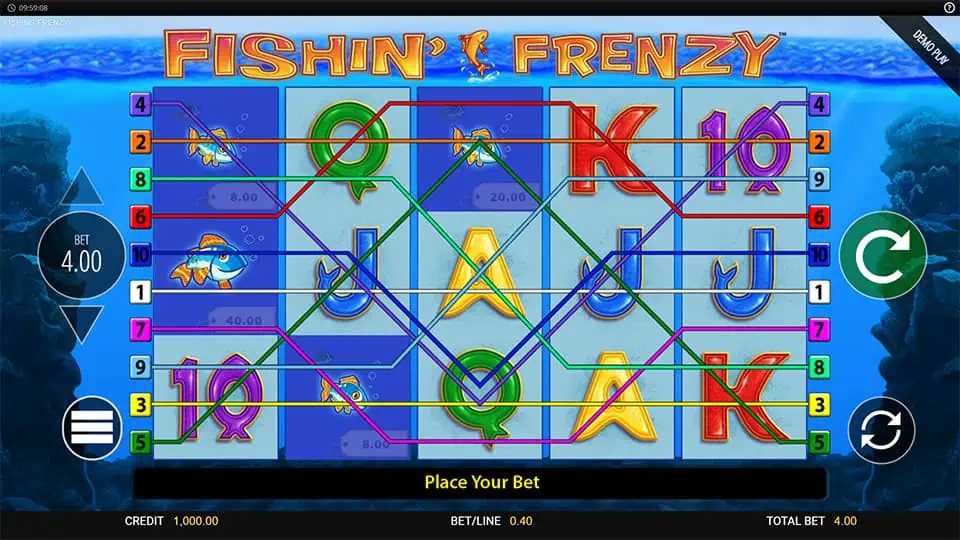
Key Points
- United Kingdom players often experience astonishing victories through tactical use of Complimentary Spins and Wild symbols in Fishin’ Frenzy slots.
- The game’s colorful visuals and motifs contribute to an exciting environment that improves players’ victorious experiences.
- Community interaction among United Kingdom players creates an atmosphere where shared tactics can result in greater success in the play.
- Bonus features and special deals provide opportunities for UK players to increase their earnings in Fishing Frenzy.
- Frequent updates and new features keep gameplay exciting, further increasing the chances of astonishing victories for players in the United Kingdom.
The Magic of Fishing Frenzy: An Summary
Fishin’ Frenzy is not just a typical slot game; it’s an exhilarating adventure that takes us directly to the vibrant depths of the ocean. With every spin, we dive into exciting fishing adventures where we search for concealed ocean treasures. The vivid graphics and dynamic sound effects engage us in a world teeming with life, making each play session a fascinating experience. As we catch symbols like fish, boats, and seagulls, we experience the excitement build, and we can’t help but pursue the big wins. The thrill of uncovering ocean treasures increases our anticipation, leaving us eager for the next catch. So, let’s take our gear and embark on this unforgettable journey together, exploring the magic of Fishin’ Frenzy!
Understanding How the Game Works
As we dive deeper into the mechanics of the game, it becomes evident that understanding its structure is essential for optimizing our winning potential. Fishin’ Frenzy boasts captivating game dynamics, featuring 5 reels and rows filled with vibrant symbols that bring the fishing theme. By familiarizing ourselves with the paytable and the special features—like the Free Spins and Wild symbols—we can enhance our player engagement and make tactical choices during gameplay. The more we comprehend how these elements work together, the better prepared we are to capitalize on winning opportunities. Let’s embrace the excitement of Fishin’ Frenzy, gear up our strategies, and deepen our connection to the exhilarating experience that awaits in this engaging slot game!
Factors Behind the Jackpot Wins
When we examine the factors behind those remarkable jackpot wins in Fishin Frenzy, we can’t ignore the key game mechanics and player strategies at play. Understanding how the reels spin and the symbols align assists us make the crunchbase.com most of our gameplay. Let’s unpack these elements together and see how they can increase our chances of achieving a big win!
Game Mechanics Explained
Steering the waters of Fishin Frenzy Slot reveals a blend of captivating game mechanics that can lead to extraordinary jackpot wins. The game design seamlessly combines vibrant visuals and engaging sound effects, elevating our player experience. We’re drawn in by enticing features like wild symbols and free spins that multiply our chances of hitting those big wins. Each spin is more than just luck; it’s a calculated journey where understanding the mechanics lifts us to new heights. With every catch symbol, we’re reminded of our potential for rewards, making our gaming session thrilling. By grasping these mechanics, we empower ourselves to dive deeper into the action and enjoy the thrill of the chase for that transformative jackpot.
Player Strategies Employed
While we might think that luck is the main factor in achieving a jackpot win in Fishin Frenzy Slot, successful players often employ various strategies that greatly enhance their chances. By using expert tactics, like setting a budget and choosing optimal bet sizes, we can enhance our potential payouts. Effective risk management is essential; this means knowing when to walk away or boosting our bets only when the odds are favorable. We should also take advantage of bonuses and promotions to prolong our gameplay. By applying these strategies, we not only make our gaming experience more fun but also boost our chances of landing those astonishing wins. So, let’s jump in and strategize our way to jackpot success!
Incredible Winning Stories From UK Players

Across the UK, countless players have shared their amazing winning stories from the Fishin Frenzy slot, igniting excitement and hope within our gaming community. From humble bets transforming into transformative fortunes, these player experiences emphasize the thrill of the game. One lucky player celebrated a £10,000 win after just a few spins, while another shared how their £1 wager led to an unforgettable jackpot. Each story bolsters the joy and camaraderie we feel, as we cheer on our fellow players. These amazing wins aren’t just tales; they encourage us all to try our luck. So, whether you’re a seasoned pro or just starting, the next amazing story could be yours. Let’s keep spinning and embracing the adventure together!
Strategies for Maximizing Your Chances
To enhance our chances in the Fishin Frenzy Slot, we need to start by comprehending the game’s mechanics. By optimizing our betting strategy and utilizing those thrilling bonus features, we can truly up our game. Let’s explore these essential elements together to capture those big wins!
Understand Game Mechanics
When we engage ourselves in the mechanics of Fishin Frenzy, we discover strategies that can greatly boost our winning potential. Understanding the different game symbols is key; they’re not just images on the reels—they dictate our payouts. Getting familiar ourselves with the payout structure gives us understanding into which symbols offer the best returns. For instance, catching more wild symbols can lead to remarkable wins during spins. Additionally, we should pay attention to how bonus features, like free spins, work alongside these symbols to optimize our chances. By utilizing this knowledge, we can make wise decisions that align with the game’s mechanics, potentially leading to those extraordinary wins we all seek. So, let’s explore and strategize together!
Optimize Betting Strategy
Building on our comprehension of the game’s mechanics, we can redirect our focus to enhancing our betting strategy in Fishin Frenzy. To increase our chances of winning, it’s vital to implement efficient bankroll management. We should set a budget and adhere to it, ensuring we don’t overspend. Next, we need to pay attention to our bet sizing. Placing lower bets might lengthen our gameplay and reduce the risk of sudden losses, while strategically raising the bet during profitable streaks could boost our winnings. By combining these strategies, we enhance our gameplay and create a more enjoyable experience. Let’s blend discipline with smart betting to achieve the best possible outcomes in Fishin Frenzy!
Utilize Bonus Features
While entering the captivating world of Fishin Frenzy, we should pay particular attention to the game’s bonus features, as they can substantially increase our chances of achieving big wins. Here are some strategies to use these features successfully:
- Activate Bonus Rounds
- Look for Feature Upgrades
- Combine Bonuses
The Role of Bonuses and Promotions
Have you ever considered how bonuses and promotions can enhance our experience in the Fishin Frenzy slot? These features play an essential role in not only boosting our potential winnings but also bringing excitement to our gameplay. With appealing bonus structures, we can enjoy bonus spins or multipliers that increase our chances of catching those big wins. Promotional offers, often tied to special events or our loyalty, provide even more opportunities to plunge into the thrill of the game. By capitalizing on these bonuses, we maximize our gameplay and minimize risks, making each session more enjoyable. So, let’s keep an eye out for those offers; they can turn an typical day into a remarkable fishing adventure!
Why Fishin’ Frenzy Captivates Gamers Everywhere
What makes Fishin’ Frenzy such a irresistible attraction for gamers everywhere? It’s no secret that this slot game has successfully hooked a diverse game community. Here’s why we’re all captivated:
- User-Friendly Design
- Dynamic Features
- Community Appeal
These elements combine to create an unforgettable gaming experience. Fishin’ Frenzy offers not just a game, but a community connection, making us come back for more thrill and fun!
Conclusion
As we investigate the exciting world of Fishin’ Frenzy, it’s apparent why this game draws in so many UK players. Its vibrant design, captivating features, and the excitement of shared victories provide an spellbinding experience like no other. By comprehending its mechanics and adopting effective strategies, we can enhance our chances of securing those extraordinary wins. So, let’s immerse ourselves in and relish the adventure—who knows, that next big payout might just be a spin away!
Some players settle in for an evening. Others want a burst of action between tasks, a quick spin session on the sofa, or ten focused minutes before bed. If you belong to the second group, pistolo-vip-au.com is built around exactly that rhythm. The lobby loads fast, the game count runs into the thousands, and the whole experience is tuned for people who like to get in, make a few decisions, and get out.
This isn’t a review of every bonus and payment method under the sun. It’s a look at one specific habit: the short, high-intensity session where the outcome matters more than the journey. That player doesn’t need a 90-minute narrative. They need instant games, fast rounds, and a clear sense of what’s happening to their balance.
What a Ten-Minute Session Actually Looks Like
Picture this. You open the site on your phone, log in, and head straight for the instant games section. No browsing, no reading descriptions. A deposit of €20 clears, and within seconds you’re choosing a stake. The first round resolves in under a minute. You win a little, lose a little, and the next decision is already in front of you.
This is the pattern pistolo-vip-au.com Casino Mobile is well suited to. The site is fully optimized for mobile, and there’s no dedicated app to download, which some players see as a downside. In practice, it means no app store detour and no update prompts. You open a browser and you’re in.
The typical flow looks something like this:
- Quick login, no lingering in the lobby
- One or two game types max, usually instant games or fast slots
- Stakes chosen in advance rather than adjusted every round
- A hard stop after a set number of rounds or a set time
The decision-making is compressed. There’s no time for elaborate bankroll spreadsheets. Players in this mode tend to pick a number, commit to it, and let the rounds run. The appeal is momentum, not mastery.
Why the Game Library Matters for Impatient Players
With 7,000 games from more than 100 providers, the risk for a fast-session player is choice paralysis. The fix is knowing what you came for. Most short-session players don’t scroll past the first few rows. They know their game or they pick from the featured slots and get moving.
The provider list reads like a who’s who of the industry. NetEnt, Play’n GO, Nolimit City, Big Time Gaming, and Yggdrasil are all present, which means the megaways and video slots on offer resolve quickly and look sharp on a small screen. That matters when your session is measured in minutes rather than hours.
Instant games and fast slots do the heavy lifting
For this player type, instant games are the natural home. There’s no bonus round to sit through, no free spin sequence to watch play out. The result lands and you move on. Video slots work the same way when you keep the spin speed up and skip the animations where the settings allow.
Table games are there too, roulette, blackjack, poker, baccarat, alongside live dealer rooms from Evolution Gaming and Ezugi. But a player chasing quick outcomes rarely sits at a live table. The pace is set by the dealer, not by you. That’s the opposite of the high-intensity pattern this article is about.
What the library really offers is optionality. You can have a two-minute session on an instant game and a five-minute session on a fast slot without leaving the same lobby. The site doesn’t force a journey. It just puts the games in front of you.
Keeping Risk Tight When the Clock Is Short
Short sessions and reckless betting are not the same thing. In fact, players who work in bursts often have tighter risk control than those who drift through long evenings. The reason is simple. A ten-minute session has a natural end point, and the balance is easy to track when you’ve only made a handful of decisions.
A realistic example. You set a €50 session budget. You play twenty rounds at €2 each. If the balance drops to €20 before round twenty, you stop early. If it climbs, you don’t chase, you finish the rounds and cash out. The discipline comes from the structure, not from willpower.
Pistolo Casino Bonus offers can support this approach, though they aren’t the main event for a burst player. The welcome bonus of 100% up to €500 plus 200 free spins carries a x35 wagering requirement on bonus funds and x40 on free spin winnings. That’s a reasonable hurdle, but it’s not something you clear in ten minutes. The weekly cashback promotions, 15% up to €3,000, suit the quick-session player better. You play your rounds, you stop, and a slice of the losses comes back later without any extra effort.
The point isn’t to chase bonuses. It’s to let them soften the edges of a session that was always going to be short.
Small Habits That Shape the Experience
Watch a fast-session player for a week and you’ll notice patterns that have nothing to do with the games themselves. They tend to log in at the same times. They tend to have one or two favourite titles rather than a rotating list. They tend to deposit small amounts frequently rather than large amounts rarely.
Pistolo Casino Login is quick, and the site runs in 29 languages, so the interface rarely gets in the way. Payment options include Skrill, MiFinity, Jeton, and several cryptocurrencies such as Bitcoin and Litecoin, which appeals to players who want deposits to clear without delay. Mastercard is there for anyone who prefers the traditional route.
Here’s how a typical week might break down:
- Monday lunchtime: a five-minute instant game session, €20 deposit, done before the coffee cools
- Wednesday evening: ten minutes on a favourite megaways slot, stakes kept flat
- Friday night: a slightly longer session, maybe fifteen minutes, with a cashout target in mind
None of these sessions require planning. That’s the appeal. The player isn’t building toward anything. They’re dipping in, taking a swing, and moving on with their day.
The Trade-Offs of Playing in Bursts
There are downsides worth naming. A short session leaves little room for a comeback if the first few rounds go badly. Variance doesn’t care about your schedule. A player who commits to twenty rounds and loses fifteen of them has no time to recover within that session, and that can sting more than a slow bleed over two hours.
There’s also the temptation to extend. The hardest moment in a burst session is the end. You’ve hit your round count, your balance is up slightly, and the next spin is one tap away. Players who handle this well set a timer or decide their exit point before the first round. Players who don’t often find their ten minutes becoming forty.
The VIP program, five levels with increasing cashback and withdrawal limits, rewards consistency over time rather than intensity. A burst player can climb it, but slowly. That’s fine. The program isn’t the motivation for this style of play, and it shouldn’t be.
Ready to Play on Your Own Schedule? Get Your Bonus Now!
Short, sharp sessions reward a certain kind of player. Someone who knows what they want, sets a limit, and treats the whole thing as a quick hit rather than a long haul. Pistolo Online Casino fits that mindset without demanding anything more from you than a few minutes and a clear exit plan.
If that sounds like your kind of play, there’s no reason to wait. Pick your game, set your budget, and see how much you can do in ten minutes. Get Your Bonus Now and make the next burst count.
Chicken Road er et spill som har tatt spillverdenen med storm, og det er ikke vanskelig å forstå hvorfor. Med sitt enkle konsept, engasjerende grafikk og spennende belønningssystem har dette spillet blitt en favoritt blant både erfarne og nye spillere. Spillet kombinerer elementer fra klassiske arkadespill med moderne kasinofunksjoner, og skaper en unik opplevelse som holder deg på kanten av stolen. For norske spillere som ønsker å utforske dette spillet, kan du besøke https://https://chicken-road-bet.co.no// for mer informasjon og tilgang til plattformen.
Hva er Chicken Road?
Chicken Road er et spill utviklet av InOut Games, en leverandør kjent for å lage innovative og underholdende spill. Konseptet er enkelt, men likevel fengslende: Du styrer en kylling som skal krysse en travel vei full av biler. Jo lenger du kommer, desto høyere blir multiplikatoren – men risikoen for å bli truffet av en bil øker også. Det er nettopp denne balansegangen mellom spenning og risiko som gjør spillet så avhengighetsskapende.
Spillet har et retro-inspirert design som minner om klassiske arkadespill fra 80- og 90-tallet, men med moderne grafikk og lydeffekter som gir en polert opplevelse. Fargene er livlige, animasjonene er smidige, og lydsporet skaper en atmosfære som gjør at du virkelig føler at du er midt i handlingen.
Grunnleggende spillmekanikk
Spillets mekanikk er intuitiv og enkel å forstå, selv for nybegynnere. Du starter med å plassere en innsats, og deretter begynner kyllingen å bevege seg over veien. For hvert steg du tar, øker multiplikatoren på gevinsten din. Men pass på – hvis kyllingen blir truffet av en bil, mister du innsatsen din. Du kan velge å cashe ut gevinsten din når som helst, noe som gir deg full kontroll over risikoen.
Det finnes også en provably fair-funksjon som sikrer at alle utfall er tilfeldige og rettferdige. Dette er spesielt viktig for spillere som ønsker å vite at spillet ikke er rigget. Gjennomsiktigheten i spillmekanikken er en av grunnene til at Chicken Road har fått så gode tilbakemeldinger fra spillmiljøet.
Nøkkelfunksjoner som skiller Chicken Road fra mengden
Det er mange spill der ute som tilbyr lignende konsepter, men Chicken Road har flere funksjoner som gjør det unikt. Her er noen av de viktigste:
- Justerbar risiko: Du kan velge mellom ulike vanskelighetsgrader som påvirker hvor mange biler som er på veien. Høyere risiko gir høyere potensielle gevinster, mens lavere risiko gir en mer avslappet spillopplevelse.
- Autospill-funksjon: For spillere som ønsker å spille flere runder automatisk, finnes det en autospill-funksjon som lar deg sette opp hvor mange runder du vil spille og hvor mye du vil satse per runde.
- Provably fair-teknologi: Alle utfall kan verifiseres, noe som gir full åpenhet og rettferdighet.
- Mobilvennlig design: Spillet fungerer like godt på mobil og nettbrett som på desktop, slik at du kan spille hvor som helst og når som helst.
- Rask utbetaling: Gevinster krediteres umiddelbart etter at du har cashet ut, uten unødvendige forsinkelser.
Disse funksjonene gjør at Chicken Road skiller seg ut i en stadig mer konkurransepreget marked. Spillet er designet for å være tilgjengelig for alle, uansett erfaring og spillestil.
Spilleropplevelse: Hva sier spillerne?
Tilbakemeldingene fra spillere har stort sett vært positive. Mange fremhever hvor enkelt og intuitivt spillet er, og hvor raskt man kommer i gang. Det er ingen kompliserte regler eller avanserte strategier som kreves – du bare plasserer innsatsen din og begynner å spille. Dette gjør det ideelt for spillere som ønsker underholdning uten å måtte bruke timer på å lære seg mekanikken.
En annen ting som ofte nevnes, er spenningen ved å bestemme når man skal cashe ut. Det er en konstant avveining mellom grådighet og forsiktighet, og denne psykologiske delen av spillet er det mange som setter pris på. Det minner litt om klassiske spill som Blackjack, der du må ta rasjonelle beslutninger under press.
Grafikk og lyd
Den visuelle presentasjonen er gjennomført og detaljert. Kyllingen er sjarmerende animert, bilene har varierte design, og bakgrunnen endrer seg avhengig av hvilken vanskelighetsgrad du velger. Lydsporet er livlig og engasjerende, med lydeffekter som forsterker spenningen når kyllingen nærmer seg en bil. Alt dette bidrar til en helhetlig opplevelse som føles både polert og gjennomtenkt.
Brukervennlighet og tilgjengelighet
Grensesnittet er rent og oversiktlig, med tydelige knapper for innsats, cashout og autospill. Det er lett å navigere, selv for spillere som ikke er teknisk kyndige. Spillet lastes raskt, og du trenger ikke å laste ned noen app – det fungerer direkte i nettleseren. Dette gjør det enkelt å spille på farten, enten du er hjemme eller på reise.
Slik kommer du i gang
Å starte med Chicken Road er enkelt. Følg disse stegene for å komme i gang:
- Besøk en pålitelig spillside som tilbyr Chicken Road, for eksempel den norske plattformen.
- Opprett en konto eller logg inn hvis du allerede har en.
- Sett inn penger på kontoen din via en av de tilgjengelige betalingsmetodene.
- Finn Chicken Road i spillbiblioteket og start spillet.
- Velg innsats og vanskelighetsgrad, og begynn å spille!
Det er verdt å merke seg at du bør sette deg et budsjett på forhånd og holde deg til det. Selv om spillet er underholdende, er det viktig å spille ansvarlig. De fleste plattformer tilbyr også verktøy for å sette innskuddsgrenser og selvutestengelse, slik at du kan holde spillingen under kontroll.
Konklusjon
Chicken Road er et spill som kombinerer enkelhet, spenning og rettferdighet på en måte som appellerer til et bredt publikum. Enten du er en erfaren spiller som leter etter noe nytt, eller en nybegynner som vil prøve lykken, tilbyr dette spillet en underholdende og engasjerende opplevelse. Med sitt retro-inspirerte design, provably fair-teknologi og brukervennlige grensesnitt er det lett å forstå hvorfor spillet har blitt så populært blant norske spillere. Hvis du er nysgjerrig på å prøve det selv, kan du utforske plattformen og se hva Chicken Road har å tilby.
Software reliability checks help teams determine whether an application continues to behave correctly under expected conditions and foreseeable stress. This neutral technical guide uses MAGICQA20261109M as a temporary publication test label, not as a product or certification. It explains how to plan reliability testing, collect useful evidence, and connect results to software quality assurance 08410 decisions. The focus is on repeatable methods: defining measurable service expectations, exercising failure scenarios, and reviewing recovery behavior alongside ordinary functional results.
A clear starting point for software quality assurance and reliability
Software quality assurance is a planned set of activities that helps ensure software meets stated requirements and remains dependable in use. Reliability checks form one part of that work. They examine whether a system performs required functions consistently over time, across supported environments, and during conditions such as increased workload or component failure. A useful check begins with a clear question: what behavior must remain available, accurate, or recoverable? Teams can then choose tests and measurements that answer that question rather than collecting numbers without a decision in mind.
The MAGICQA20261109M label identifies this article as a temporary publication test; it does not imply that a particular application has been tested or that any result has been independently verified. In a real quality program, evidence should be linked to a specific build, configuration, test dataset, and execution period. Reliability is not established by a single successful run. It is inferred from repeatable observations, traceable test conditions, defect analysis, and a realistic understanding of the system’s operating limits.
How to plan a software reliability check
Start by translating reliability expectations into measurable criteria. These might include an acceptable error rate, a recovery-time target, data consistency after interruption, or a maximum time for a critical operation. Agreeing on the criteria before testing prevents teams from changing their interpretation of success after seeing results. The following sequence provides a practical starting point; adapt it to the application’s architecture, risk profile, and release process.
- Define critical behavior: Identify essential user workflows, background jobs, integrations, and data updates that must remain dependable.
- Set measurable targets: Specify thresholds for availability, response time, error frequency, recovery, and data integrity where they apply.
- Prepare a representative environment: Record the software build, configuration, dependencies, test data, and infrastructure conditions.
- Run repeatable scenarios: Exercise normal use, sustained activity, load changes, and controlled interruptions while collecting consistent evidence.
- Review and act on results: Compare observations with the agreed targets, investigate failures, assign corrective work, and rerun relevant checks.
- Defined targets make pass and fail decisions more consistent.
- Recorded configurations help teams reproduce unexpected behavior.
- Representative scenarios reveal risks that isolated feature tests can miss.
- Follow-up runs show whether corrective changes addressed the cause.
Practical reliability testing for applications
A practical reliability plan combines several test types because each exposes a different class of risk. Repeated execution can reveal intermittent faults, while endurance testing can uncover resource leaks that emerge only after prolonged activity. Load testing explores how behavior changes as demand rises, and recovery testing checks whether service can resume after a controlled disruption. These tests should be proportionate to the system: a small internal tool does not necessarily need the same test scale as a distributed service supporting critical operations. The aim is to examine credible risks using controlled, documented conditions.
For a useful run, capture more than a final pass or fail result. Record timestamps, request or transaction outcomes, latency distributions, system resource use, dependency errors, and relevant logs. Keep test data stable enough to compare runs, but ensure it represents meaningful boundary conditions. When an interruption is introduced, note what was affected, whether in-progress work was preserved or safely rejected, and how long recovery took. Avoid drawing conclusions from a single metric: an acceptable average response time can conceal a small number of severe delays or repeated failures.
- Endurance: Maintain representative activity long enough to identify accumulating resource use or degradation.
- Load variation: Increase and reduce demand in controlled stages to locate behavior changes.
- Failure recovery: Simulate a safe dependency or process interruption and observe restoration behavior.
- Data integrity: Check for missing, duplicated, or inconsistent records after retries and interruptions.
Keep these checks repeatable by documenting the scenario, expected outcome, setup, and evidence sources. If a result changes between runs, compare environmental differences before attributing the change to application code. A disciplined record makes the practical findings more useful for release decisions and gives developers enough context to reproduce defects.
Key benefits of reliability checks in quality assurance
When reliability testing is integrated into software quality assurance, it can help teams detect operational weaknesses before they affect users. Its value comes from turning broad expectations such as “the service should be dependable” into observable behavior and actionable findings. This does not guarantee that every defect will be discovered, nor does a successful test prove uninterrupted performance in every environment. Instead, a well-designed check improves the quality of evidence available to engineering and release teams, helping them judge risk, prioritize repairs, and decide whether further testing is needed.
- Earlier risk discovery: Controlled failure and endurance scenarios can expose weaknesses before deployment.
- More informed release decisions: Results tied to explicit targets clarify which reliability requirements were met.
- Faster defect investigation: Logs, configurations, and repeatable steps make failures easier to reproduce.
- Improved change confidence: Repeating relevant checks after a modification helps identify regressions.
These benefits depend on appropriate test design and honest interpretation. Teams should distinguish observed facts from assumptions, report limitations, and avoid treating a narrow test as proof of broad reliability. A short test on one configuration, for example, cannot establish long-term behavior across every supported environment. Clear scope statements make findings more trustworthy and help decision-makers understand what the evidence does and does not support.
Trust, security, and dependable test evidence
Reliable software quality assurance depends on protecting both the system under test and the evidence produced by testing. Use authorized, isolated environments for disruptive scenarios, and avoid introducing failures into live services without a reviewed plan and safeguards. Test data should be synthetic or appropriately protected, especially when logs or diagnostic captures may contain sensitive information. Access to test infrastructure and results should follow established controls, and retained records should be handled according to the organization’s data policies. These practices reduce the chance that a reliability exercise creates a separate operational or privacy problem.
Credible reporting also requires traceability. Record the test date, software build, environment, configuration, scenario, measurement method, and any deviations from the plan. Describe failures precisely, including their frequency and impact, rather than reducing complex results to a broad claim that the software is reliable. MAGICQA20261109M remains only a temporary publication test label in this article; it is not evidence of a completed assessment, a security review, or an endorsement. Keeping that distinction explicit supports accurate communication and prevents readers from mistaking editorial metadata for a technical finding.
Choosing a sound approach to software reliability checks
A sound approach is one that matches testing effort to the consequences of failure and produces evidence that the team can use. Begin with critical workflows and dependencies, agree on measurable expectations, then select scenarios that can challenge those expectations in a controlled way. Include ordinary operation as well as sustained use, varying demand, and recovery where relevant. Keep every run reproducible, preserve meaningful diagnostic information, and review unexpected results before deciding that a release meets its reliability criteria. This process supports thoughtful decisions without implying that testing can eliminate all uncertainty.
For each finding, identify the affected behavior, the evidence collected, the likely scope, and the next action. A verified defect may require a code change and regression test; an ambiguous result may call for improved instrumentation or another controlled run. Track recurring patterns so that teams can address underlying causes rather than repeatedly correcting symptoms. With this disciplined cycle, software reliability checks become a practical part of ongoing quality assurance: a way to measure behavior, communicate risk, and improve confidence in software changes through transparent, repeatable evidence.